

The Peace Table

In one corner of our daughter’s Montessori preschool classroom sat a small table with two tiny chairs. It wasn’t for coloring, snacks, or as a place where children were sent for punishment. It was simply where they went when something between them had been broken.
Whenever two children found themselves angry, hurt, frustrated, or unable to work something out, they were invited to sit there together. Sometimes they arrived with crossed arms. Sometimes with tears already streaming down their faces. There was usually a box of tissues nearby and an adult just out of sight - not leading the conversation or deciding who was right, but watching carefully enough to offer gentle guidance if the path toward peace became difficult to find.
Then the adult stepped back again.
I visited the classroom fairly often and was struck by how ordinary it all seemed. The rest of the room carried on. Children built towers, traced sandpaper letters, watered plants, prepared snacks, rolled up rugs, and helped one another with their work. Meanwhile, two classmates sat quietly at a little table doing something every bit as important as learning anything else happening in the classroom.
No one was expected to pretend they weren’t hurt. No one was asked to excuse unkindness. The goal wasn’t deciding who had been right but to repair the relationship enough that they could return to the day. Sometimes it took five minutes. Sometimes much longer. There were tears, awkward silences, reluctant apologies, unexpected laughter, and eventually an overexaggerated handshake, or sometimes a hug, before the children wandered back into the joyful business of being children.
I have thought about that little table for years and hope I always will.
Not because I believe conflicts between nations resemble disagreements between preschoolers. They don’t. History, injustice, fear, power, economics, religion, trauma, and generations of woundedness make peace between adults infinitely more complicated than peace between four-year-olds.
But that little table taught me something I have never forgotten. Peace is work; hard work.
Long before our daughter entered that classroom, I had already begun learning that lesson. The first war I protested was Vietnam. I was a teenager growing up in the San Francisco Bay Area, surrounded by thousands of others asking difficult questions about violence, truth, and the human cost of conflict. In the years since, I have continued, in one way or another, to speak for peace. Not because I believe peace is easy, or because I imagine every conflict has a simple answer. And certainly not because I fail to recognize that there are moments when defending those who are vulnerable becomes necessary.
I simply believe war should remain humanity’s last response, never its first, second, or third impulse.
My deepest protest has never been directed toward those who serve. It has been toward the violence itself, toward the lives forever altered by it, and toward the hypocrisy, hidden motives, and deception that too often accompany decisions to wage war.
Every generation inherits the responsibility to ask difficult questions before asking others to bear such terrible costs. Peace, however, cannot simply be the thing we hope for after violence. Peace must also be something we practice before violence has the chance to take root.
The children in that classroom weren’t learning conflict resolution because they lived in a peaceful world. They were learning how to create one. The little table with two little chairs did not magically produce peace. The culture of that classroom did. The table simply gave that culture a place to practice.
I have often wondered what our communities, our institutions, and even our nations might look like if we devoted even a fraction of the imagination, resources, and discipline to teaching the work of peace that we devote to preparing for war.
Not peace as wishful thinking but peace as a practice. The practice of listening. The practice of telling difficult truths without humiliation. The practice of remaining at the table a little longer than anger wants us to. The practice of seeing another person’s humanity without surrendering our own convictions. Peace is work. Some of that work is preventative and some of it is repair. The more faithfully we practice the first, the less often the second becomes necessary. Both are sacred work.
Because whatever reasons lead people into armed conflict, one truth remains. Someone always carries it home. The casualties are counted in lives lost, but they also live on in families, neighborhoods, memories, and bodies. They live in civilians rebuilding homes that no longer exist. They live in refugees carrying memories they never asked to keep. They live in service members whose wounds are visible, and in those whose deepest injuries are carried where no one else can see them.
My youngest brother served our country for two tours and 2 years beyond that. His experiences are different from mine. He has lived realities I never will. I have spent much of my life questioning war itself. We arrived at our convictions by different roads. Yet, I know we stand together on something that matters deeply. The people who have carried the burdens of conflict deserve our gratitude, our respect, and our care.
Supporting veterans is not an endorsement of every military action. Caring for wounded warriors is not the same as celebrating war. To me, it is another expression of the same belief I first glimpsed in that Montessori classroom: every human being possesses a dignity that deserves protection, especially after it has been wounded.
Perhaps that is why I still think about those two little chairs. They remind me that peace is not merely the absence of war. Peace is the presence of practices that make war less likely. We become what we practice. Those children practiced peace. I have been thinking about that little table ever since.
This is my brother, a truly thoughtful and wonderful man in the world (I am blessed with two awesome brothers), and just one way he is doing the work to support wounded veterans and their families. I love you and am proud of you, Michael, always.
https://carryforward.woundedwarriorproject.org/participant/Michael-Tucker
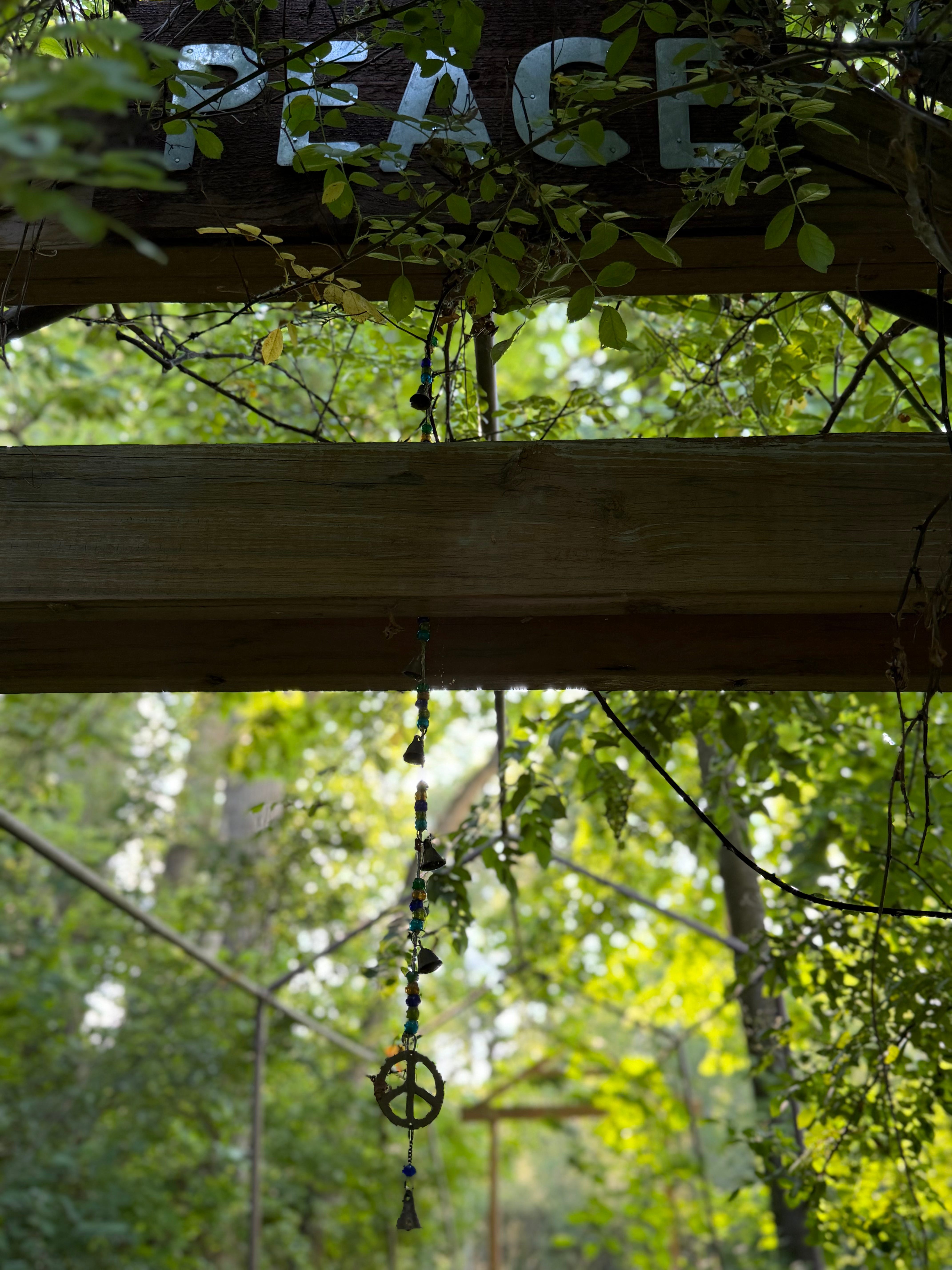
Thank you, Waugh family, for my Peace sign gift, many years ago now, that still adorns our bridge over peace-filled waters. The original wood fell apart, but the heartier letters were transferred to a new background and still hold true to what I work for in this world. Thank you for knowing my heart.